New Training
NFPA 70B – NFPA 70E Training
NFPA 70B training and NFPA 70E training for industrial electrical, maintenance, reliability and safety teams. NFPA 70B is now an enforceable standard for electrical equipment maintenance, and NFPA 70E governs electrical safety-related work practices. We teach both together, onsite at your facility, in the language of the plant floor.
Safety + Maintenance + Reliability
Two Standards. One Safer, More Reliable Electrical Program.
NFPA 70B focuses on electrical equipment maintenance. NFPA 70E focuses on electrical safety-related work practices. Together, they help organizations address equipment condition and worker safety from complementary perspectives.

NFPA 70B Training
Electrical Equipment Maintenance
NFPA 70B training covers how an electrical maintenance program is built, documented and sustained — equipment inventory and criticality, condition assessment, inspection and testing intervals, recordkeeping, and the role of predictive technologies in deciding what gets maintained and when.
- Electrical Maintenance Program (EMP) structure
- Equipment inventory, criticality & condition assessment
- Inspection, testing & maintenance intervals
- Documentation, trending & program review
NFPA 70E Training
Electrical Safety in the Workplace
NFPA 70E training covers electrical safety-related work practices: recognising shock and arc flash hazards, establishing an electrically safe work condition, risk assessment, approach boundaries, PPE selection, job planning and what it means to be a qualified person.
- Electrical safety program concepts
- Shock & arc flash hazard recognition
- Electrically safe work condition & lockout/tagout
- Approach boundaries, PPE selection & job planning
NFPA 70B vs. NFPA 70E: What Is the Difference?
NFPA 70B
Maintains the equipment. Protects reliability and uptime.
VS
NFPA 70E
Protects the people working on it. Governs safe work practices.
What Is NFPA 70B?
What Is NFPA 70B and Who Does It Apply To?
NFPA 70B is the Standard for Electrical Equipment Maintenance. It applies to the electrical, electronic and communication systems typically found in industrial plants, commercial and institutional buildings and large residential complexes. It sets out how an organisation develops, implements and sustains an Electrical Maintenance Program — what equipment is in scope, how its condition is assessed, how often it is inspected and tested, and how all of that gets documented. Because it is written in mandatory language, it can be referenced as an enforceable benchmark rather than a suggestion.
What Is NFPA 70E?
What Is NFPA 70E and Why Is It Required?
NFPA 70E is the Standard for Electrical Safety in the Workplace. It addresses electrical safety-related work practices intended to reduce worker exposure to shock and arc flash hazards. OSHA does not publish NFPA 70E, but the General Duty Clause requires employers to protect workers from recognised hazards, and NFPA 70E is widely treated as the benchmark for what reasonable protection looks like. Core concepts include the qualified person, the electrically safe work condition, risk assessment, approach boundaries, arc-rated PPE and job planning.
Condition Monitoring
Equipment Condition Is What Drives the Program
NFPA 70B training and NFPA 70E training are each commonly delivered as half-day to two-day sessions depending on audience and depth. Confirm current session length, edition taught, class size limits and certificate details with Failure Prevention Associates before booking.
Course Outline
What Your Team Learns in NFPA 70B and NFPA 70E Training
Both outlines below are taught in industrial context — referenced to switchgear, motor control centres, transformers and the equipment your technicians actually work on, not to generic classroom examples.
NFPA 70B Training Outline
Focused on the condition of the equipment and the program that keeps it serviceable.
- Scope of NFPA 70B and its transition to a standard
- Building and documenting an Electrical Maintenance Program
- Equipment inventory, criticality ranking and condition assessment
- Determining maintenance intervals from equipment condition
- Inspection and test methods by equipment type
- Switchgear, motor control centres, transformers and cabling
- Using thermography, ultrasound and motor testing as EMP inputs
- Recordkeeping, trending and program review cycles
NFPA 70E Training Outline
Focused on how people work safely on and near energized electrical equipment.
- Electrical safety program requirements and responsibilities
- Shock hazard, arc flash hazard and arc blast recognition
- Establishing an electrically safe work condition
- Lockout/tagout and verification of de-energisation
- Risk assessment procedure and the hierarchy of risk controls
- Limited, restricted and arc flash approach boundaries
- Arc-rated PPE selection, care, inspection and use
- Energized electrical work permits and job safety planning
- Qualified versus unqualified person requirements
Course length, format and edition
NFPA 70B training and NFPA 70E training are each commonly delivered as half-day to two-day sessions depending on audience and depth. Confirm current session length, edition taught, class size limits and certificate details with Failure Prevention Associates before booking.
How NFPA 70, 70B and 70E Fit Together
Installation. Maintenance. Safe Work Practices.
The NEC governs how a system is installed. NFPA 70B governs how it is maintained afterwards. NFPA 70E governs how people work on it safely throughout. This is an educational simplification rather than an official NFPA diagram, but it is how most plant and maintenance leaders find it easiest to hold the three apart.
NFPA 70 / NEC
Installation
NFPA 70B
Maintenance
NFPA 70E
Safe Work Practices
Better Programs
Safety + Reliability
NFPA 70B + Condition Monitoring
Condition Monitoring Is Where NFPA 70B Training Gets Practical
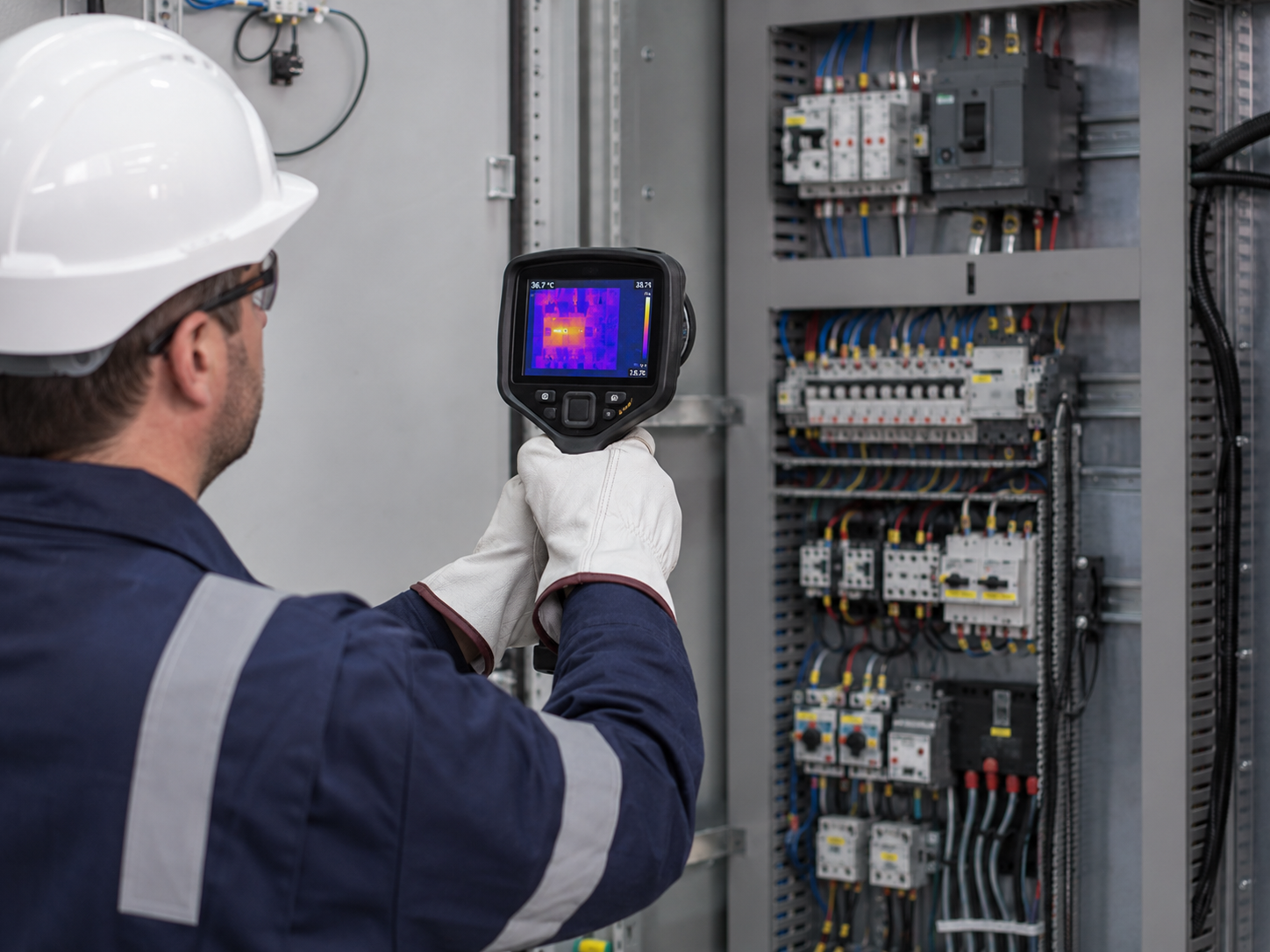
Most NFPA 70B training is taught by trainers. Ours is taught by a predictive maintenance company. Failure Prevention Associates runs condition monitoring programs across the Gulf Coast — infrared thermography, ultrasound detection, electric motor evaluation and vibration analysis — which is the same evidence an Electrical Maintenance Program uses to justify intervals and prioritise work.
That matters because NFPA 70B has moved steadily toward condition-based maintenance and now explicitly recognises continuous monitoring technologies as valid inputs to condition assessment. A class that can connect the clause to the thermogram is a different experience from one that can only quote the clause.
- Infrared thermography and continuous thermal monitoring
- Ultrasound detection for partial discharge and arcing
- Electric motor and transformer evaluation
- Vibration analysis and predictive maintenance strategy
Onsite & Group Delivery
Onsite NFPA 70B and NFPA 70E Training Across Texas and the Gulf Coast
Most industrial teams cannot release their electricians and maintenance technicians for travel, and a class split across three public course dates loses the shared context that makes the material stick. Onsite delivery solves both problems: the session runs at your facility, on your schedule, referenced to your equipment.
Failure Prevention Associates delivers training and condition monitoring services throughout Texas, Louisiana and New Mexico, with a mill test lab in Houston. That covers the Houston Ship Channel petrochemical corridor, the Golden Triangle, the Permian Basin, the Dallas–Fort Worth metroplex and the Louisiana Chemical Corridor.
Industrial Context
Examples grounded in real maintenance and plant environments.
Combined 70B + 70E
Maintenance and safe work practices taught as one program.
Private Group Sessions
Electrical, maintenance, reliability and safety together.
Custom Training
Facility-specific or private delivery should be confirmed with FPA.
Who Should Attend?
Who Should Attend NFPA 70B and NFPA 70E Training?
NFPA 70E training is aimed at anyone exposed to electrical hazards at work, and at the supervisors and planners who write the jobs they perform. NFPA 70B training reaches wider still, because an Electrical Maintenance Program is owned by maintenance and reliability rather than by the electrical crew alone. The most productive sessions are the ones where those groups are in the room together.
Maintenance Technicians
Industrial Electricians
Reliability Professionals
Electrical Engineers
Maintenance Supervisors
Safety / EHS Personnel
Facility & Plant Managers
Maintenance Planners & Schedulers
Frequently Asked Questions
NFPA 70B & NFPA 70E Training FAQs
Common questions about how the two standards differ, what a compliant electrical maintenance program involves, and how training is delivered.