
Austin & Central Texas
Vibration Analysis Training in Austin & Central Texas
Vibration analysis training in Austin is built for fast-growing Central Texas plants that need a shared reliability baseline quickly. Central Texas manufacturers and utilities can certify analysts at our Houston-area public classes, about three hours from Austin, or bring a private Category I or II vibration analysis class to a fab, plant or utility site in Austin, Round Rock, Georgetown or Bastrop.
Where training happens
Where Vibration Analysis Training in Austin Takes Place
FPA does not run a classroom in Austin. Public classes meet in Pearland, south of Houston, close to our mill test lab. We travel to Central Texas for private on-site team classes.
- Public classes: Pearland, TX (Houston area)
- On-site classes: at your plant in Central Texas
- Training enquiries: (832) 930-0756

On-site vibration analysis training in Austin uses your own running equipment for the practicals.
Two Ways to Get Vibration Analysis Training in Austin
Step by step
How Vibration Analysis Training in Austin Works
- Tell us about your team. Send the number of analysts, their experience and the equipment they look after, for example exhaust fans, scrubber blowers and makeup air units.
- Pick the format. Choose a private class at your plant in Central Texas, or book seats at a public class in Pearland, about 165 miles from Austin.
- Train for four days. Classroom sessions plus hands-on practicals on running machinery. Process cooling water and ultrapure water pumps and similar assets make good practical subjects for Austin teams.
- Sit the exam. The certification exam is taken on day four. Analysts who pass and meet the experience requirement earn their ISO 18436-2 credential.
That is the whole process for vibration analysis training in Austin, whether you are training one new analyst or certifying a full crew.
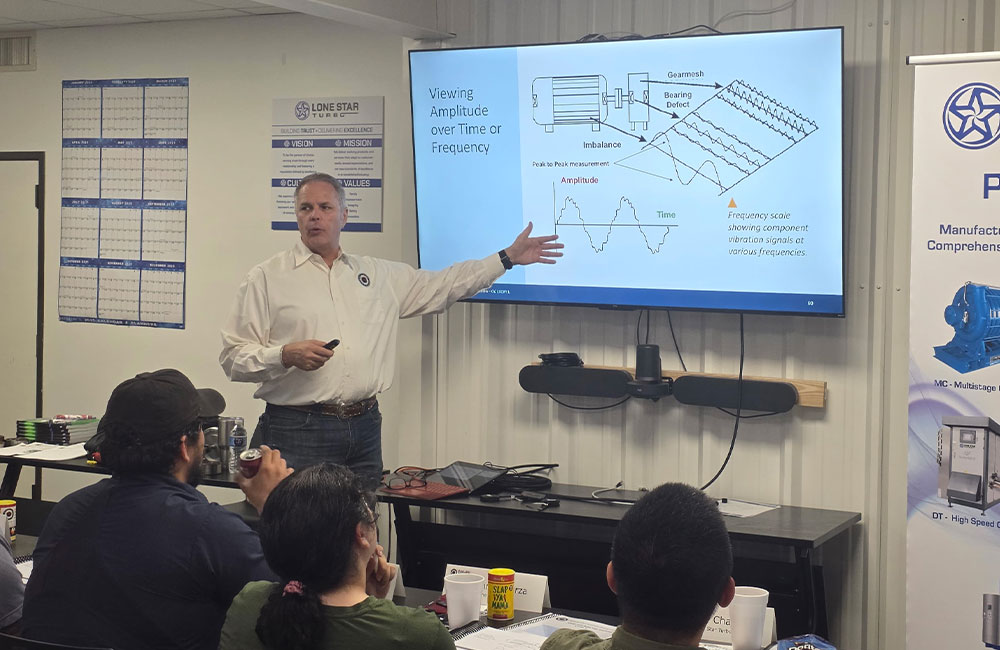
The same curriculum applies to every vibration analysis training in Austin class, on-site or public.
Central Texas
Vibration Training for Semiconductor, Advanced Manufacturing and Utility Equipment
Central Texas has become one of the country’s fastest-growing advanced manufacturing regions. It includes semiconductor fabs, electronics and battery production, automotive manufacturing, a growing number of data centers, and the electric and water utilities expanding to serve them. Aggregate quarries and cement plants along the I-35 corridor add heavy crushing and grinding equipment.
Semiconductor and clean-manufacturing sites depend on extremely reliable support equipment, including exhaust fans, process cooling pumps, vacuum pumps and chillers, where a single trip can scrap product. Category I teaches analysts to trend those assets and spot change early. Category II covers the diagnosis needed to plan a repair before it becomes an unplanned tool-down event.
Equipment Austin Analysts Train On
What Central Texas Teams Can Ask Us to Emphasize
New Central Texas plants often hire reliability technicians from very different backgrounds, including military, HVAC, automotive and process industries. An on-site class can start with shared terminology and measurement habits so the whole team collects data the same way, then spend time on the critical utility equipment, such as exhaust, cooling and vacuum systems, whose failure stops production even though it isn’t production equipment itself.
Course levels & dates
Category I & II at a Glance
Both levels are four-day classes aligned with ISO 18436-2, the international standard for vibration analyst certification. Lead instructor Dr. Karl Hoffower holds an ASNT PdM Level III credential. Full curriculum and prerequisites are on our main vibration analysis training page.
Category I covers:
- Vibration fundamentals and terminology
- Repeatable data collection and route practice
- FFT spectrum and time waveform basics
- Common faults: unbalance, misalignment, looseness and bearing wear
Category II adds:
- Advanced spectrum analysis
- Phase analysis and resonance testing
- Field balancing concepts
- Diagnostic decision-making and reporting
| Level | Prerequisite | Public class price |
|---|---|---|
| Category I | No previous vibration experience required | $1,900 (exam + $330) |
| Category II | 6 months’ experience + passed Category I exam | $2,200 (exam + $360) |
Dates and prices as published on the main training page and open to students traveling from Austin. On-site classes are quoted separately.
Questions
Vibration Analysis Training in Austin: FAQs
Book Vibration Analysis Training in Austin
Call (832) 930-0756 or send a training request to book vibration analysis training in Austin. Tell us how many analysts you have and which level they need.