Corpus Christi & the Coastal Bend
Vibration Training in Corpus Christi & the Coastal Bend
Vibration training in Corpus Christi comes to your plant or terminal, or your analysts travel 210 miles to our Pearland classes. Coastal Bend analysts can earn ISO 18436-2 Category I or II vibration analysis credentials at our Houston-area public classes, a 3.5-hour drive up US-59/I-69, or we can bring a private class to your plant in Corpus Christi, Ingleside or Portland.
Where training happens
Where Vibration Training in Corpus Christi Takes Place
We do not run a classroom in Corpus Christi. Public classes are held in Pearland, south of Houston, near our mill test lab. For Coastal Bend teams of several analysts, we travel to your site and teach on your equipment.
- Public classes: Pearland, TX (Houston area)
- On-site classes: at your plant in the Coastal Bend
- Training enquiries: (832) 930-0756

On-site vibration training in Corpus Christi uses your own running equipment for the practicals.
Two Ways to Get Vibration Training in Corpus Christi
Path 1
On-Site Vibration Training in Corpus Christi
The Coastal Bend’s export terminals and processing plants often run lean maintenance crews, which makes sending several people away for four days hard. A private class keeps them on site and lets the hands-on work happen on the equipment they maintain.
What we bring:
Step by step
How Vibration Training in Corpus Christi Works
- Tell us about your team. Send the number of analysts, their experience and the equipment they look after, for example crude and product transfer pumps at marine terminals.
- Pick the format. Choose a private class at your plant in the Coastal Bend, or book seats at a public class in Pearland, about 210 miles from Corpus Christi.
- Train for four days. Classroom sessions plus hands-on practicals on running machinery. Large compressors at processing and LNG facilities and similar assets make good practical subjects for Corpus Christi teams.
- Sit the exam. The certification exam is taken on day four. Analysts who pass and meet the experience requirement earn their ISO 18436-2 credential.
That is the whole process for vibration training in Corpus Christi, whether you are training one new analyst or certifying a full crew.
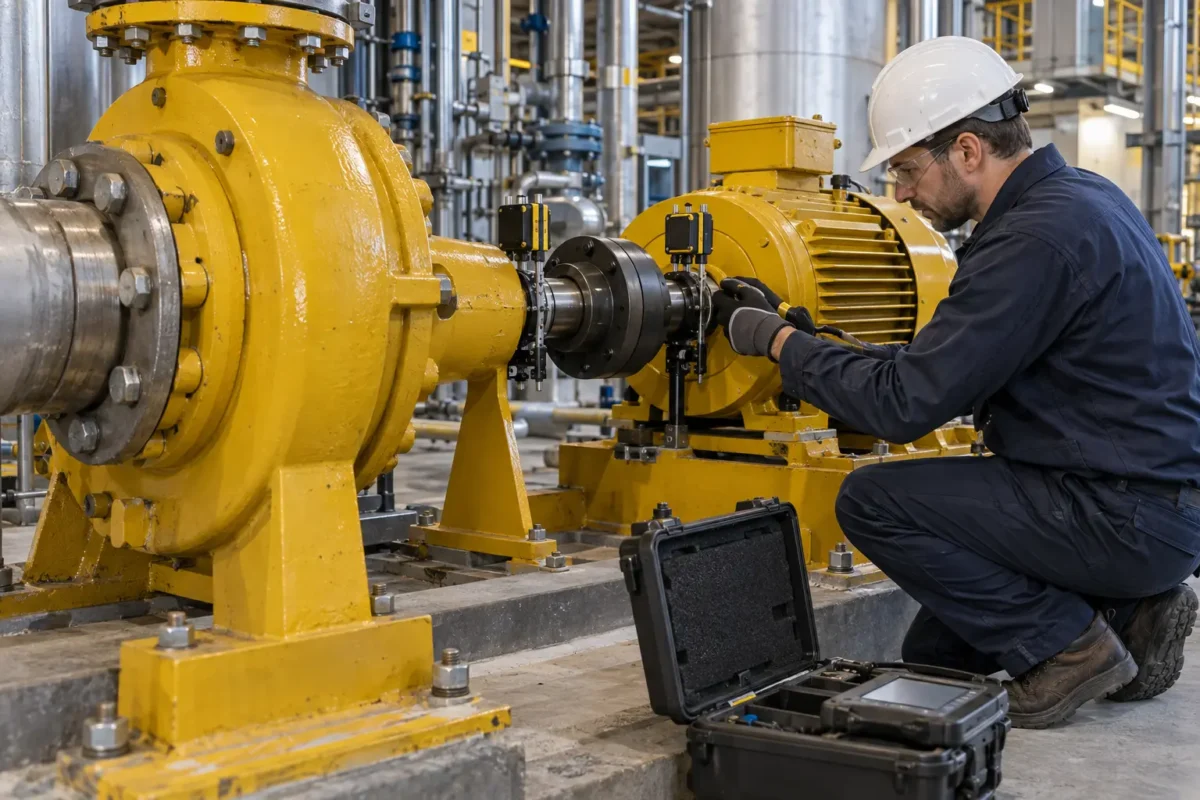
The same curriculum applies to every vibration training in Corpus Christi class, on-site or public.
the Coastal Bend
Vibration Training for Port, Refining and Export Terminal Equipment
The Port of Corpus Christi is one of the country’s largest energy export ports, and the shoreline around Corpus Christi Bay and Ingleside is lined with refineries, petrochemical and plastics plants, crude export terminals and LNG facilities. Much of this equipment is large, critical and expensive to spare.
Salt air and humidity accelerate corrosion on bases, couplings and motor frames, which can lead to looseness and soft-foot problems that analysts have to separate from true bearing defects. The course teaches how to recognize those patterns, how to collect consistent data on pumps that move product to ships, and when to escalate.
Equipment Corpus Christi Analysts Train On
What Coastal Bend Teams Can Ask Us to Emphasize
Coastal Bend operators running new export and processing facilities often have modern online monitoring systems and fewer experienced analysts to interpret them. An on-site class can focus on connecting what the online system shows with portable route data, setting sensible alarm limits on new machines, and building the judgment to tell a real developing fault from a process change on a ship-loading pump.
Course levels & dates
Category I & II at a Glance
Both levels are four-day classes aligned with ISO 18436-2, the international standard for vibration analyst certification. Lead instructor Dr. Karl Hoffower holds an ASNT PdM Level III credential. Full curriculum and prerequisites are on our main vibration analysis training page.
Category I covers:
- Vibration fundamentals and terminology
- Repeatable data collection and route practice
- FFT spectrum and time waveform basics
- Common faults: unbalance, misalignment, looseness and bearing wear
Category II adds:
- Advanced spectrum analysis
- Phase analysis and resonance testing
- Field balancing concepts
- Diagnostic decision-making and reporting
| Level | Prerequisite | Public class price |
|---|---|---|
| Category I | No previous vibration experience required | $1,900 (exam + $330) |
| Category II | 6 months’ experience + passed Category I exam | $2,200 (exam + $360) |
Dates and prices as published on the main training page and open to students traveling from Corpus Christi. On-site classes are quoted separately.
Questions
Vibration Training in Corpus Christi: FAQs
Book Vibration Training in Corpus Christi
Call (832) 930-0756 or send a training request to book vibration training in Corpus Christi. Tell us how many analysts you have and which level they need.